Follow My Blog
Get new content delivered directly to your inbox.
FAITH IN BUDDHISM posted Sunday, April 29, 2020

What is faith in Buddhism? First let’s clarify what it isn’t. My teacher, Vietnamese Zen Master Thich Nhat Hanh (affectionately called Thay) advises us to avoid being bound to any doctrine, theory or ideology, including Buddhist ones. Buddhist systems of thought are guiding means, not absolute truth.
So, without dogma, what’s there to believe in?
In his book, Understanding Our Mind, Thay says we need faith in the possibility of awakening. Awakening from what? From the incessant thinking that ties us in knots.
Chogyam Trungpa Rinpoche taught that all religions are myths, including Buddhism. The only difference is that Buddhism admits it’s a myth. Still, like many faith traditions, it’s a powerful myth. We can call it “transformational mythology.”
The Buddha said, “Faith is the beginning of all good things.” Without faith we’re too skeptical to try anything. Nihilism is the pervasive stance in our modern world.
Faith in Buddhism is based on experience. We’ve all experienced nirvana. When we let go of concepts and touch the present moment, loveliness blooms. Worldly pleasure can’t hold a candle.
Faith is not giving up when we blow it for the ten billionth time. I still go into panic mode when I get lost while driving, misplace my keys, or spill grape juice on a sweater. But after decades of Buddhist practice, I berate myself in a kinder voice.
SLOW DOWN, YOU MOVE TOO FAST posted Sunday, May 3, 2020
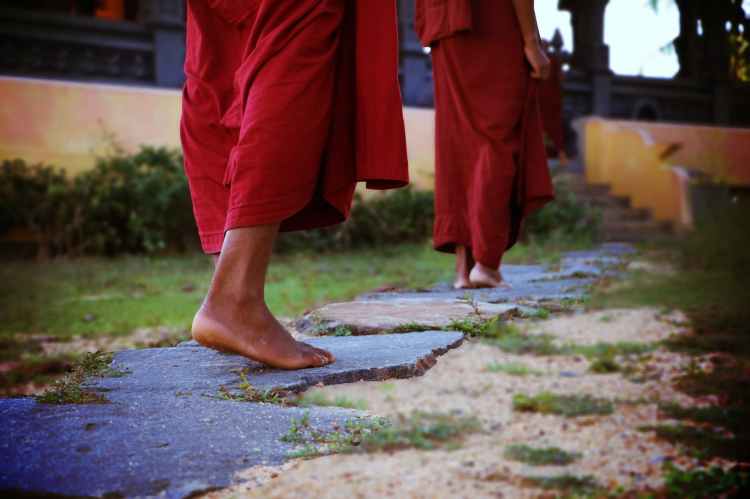
I’m always rushing around for no good reason. I spill, stumble and drop things: my hands shake and my shoulders clench. What’s the hurry?
There’s a Buddhist tale about a man on a speeding horse. When he gallops through town, hanging on for dear life, someone yells, “Where are you going in such a hurry? The man yells back, “I don’t know. Ask the horse.”
The horse is our habit energy. It carries us along and we have no idea where we’re going. The sad truth? We’re all racing to our final destination. Need I say more?
The hard part is remembering to slow down. Thich Nhat Hanh started training with his stairs. If he hurried down the stairs, forgetting to inhabit his body, he made himself go back to the top and start over.
Many Zen masters have claimed that the secret to awakening is slowing down. Could it really be that simple? Try it. Relax into your own precious embrace. Such bliss!
Eating’s another opportunity. Push away the smartphone and the New York Times. Push away even the Dharma book. Notice your resistance. Then clear the whole darn table until you notice sunlight shining on the wood. Center that bowl of oatmeal directly in front of you. Inhale. Savor. Life is good.
BUDDHIST PARABLE OF THE TIGER AND THE STRAWBERRY: posted Sunday, May 10, 2020
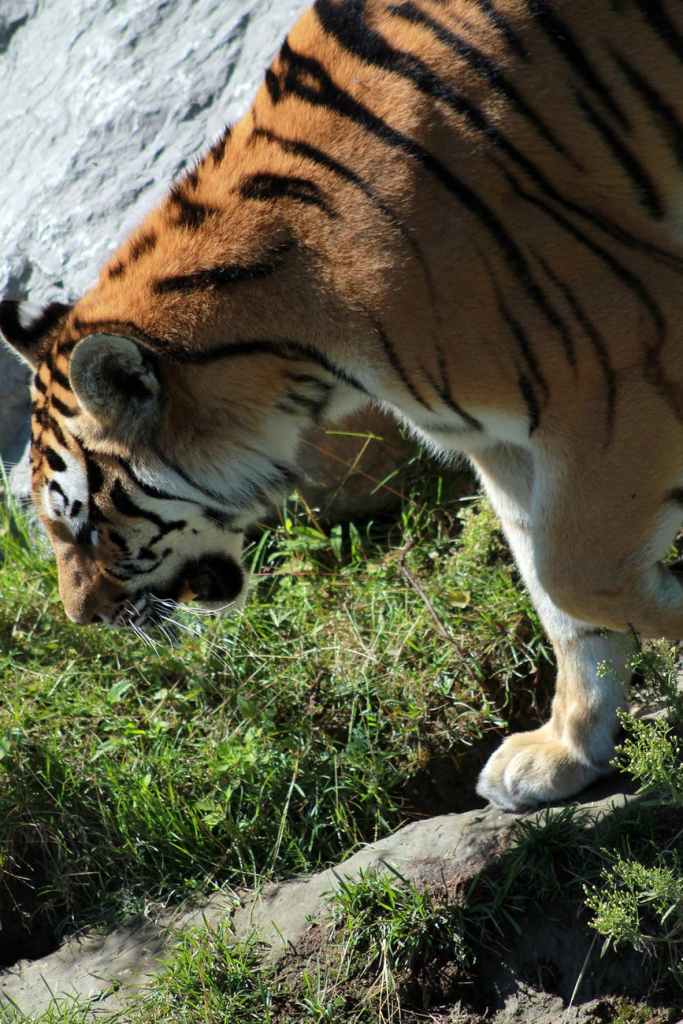
A man traveling across a field encountered a hungry tiger. He ran and the tiger chased him. Coming to a cliff, he caught hold of a vine and swung himself over the edge. The tiger sniffed at him from above snarling and snapping its jaws. Trembling, the man looked down to where, far below, three more tigers were waiting to eat him. Only the vine sustained him.
A mouse started gnawing at the vine. Just then, the man noticed a luscious strawberry growing nearby. Holding the vine with one hand, he plucked the strawberry with the other. How sweet it tasted!

Readers accustomed to Western literature wait for the ending. But this is Zen…
PARABLE OF THE POISONED ARROW Sunday, May 17th, 2020

Once in ancient times a man walked through a forest with some friends. Suddenly, a stranger leapt from behind a tree, shot him with a poisoned arrow and ran off. Since he writhed in pain, one of his friends grasped the arrow’s shaft to pull it out. But the man, a curious intellectual, stopped him, saying he needed some answers first. “What tribe did the man come from? What kind of poison was on the arrow? Was the shaft carved or whittled? As you may have guessed, the man died before the arrow was removed.
This story illustrates the focus of the Buddha’s teachings. Many followers asked him questions: Is there a God? How did the world begin? Is there life after death? He would smile kindly and respond, “I teach but one thing – suffering and the way out of suffering.” If we get caught in endless speculation, we’ll die before extracting the poison of our misperceptions.
 Lisa Glueck